Maserati has booked about 22,500 orders for new cars so far this year, as of the end of September. Nearly half the orders were for the automaker's new Quattroporte sedan.
Daimler's Mercedes-Benz Vans division has launched new engines and body styles for its range of Citan urban delivery vans which are built on an OEM basis by Renault.
The management board and works council at Schaeffler Technologies have agreed on the transfer of wheel bearing production and 400 associated job cuts by 2016 at the bearing specialist's Schweinfurt location.
European new-car registrations rose by 5.5 percent in September, helped by a surge in UK sales and an extra working day. The increase provided fresh evidence that the region's slump may be slowly bottoming out.
Bosch aims to achieve an 8 percent return on sales in its automotive division within two years, despite seeing little improvement in the European car market this decade.
Canadian automaker Magnum Cars will host the world premiere of its all-new, ultra-lightweight, high-performance sports car on October 30th. The track-oriented, street-legal Magnum MK5 will become the first Canadian model to break through the global supercar market.
Magnum Cars was founded in Quebec in 1968 by Jean-Pierre St-Jacques, a machinist and race car enthusiast who built Gilles Villeneuve's Formula Ford car in the early 1970s.
The company is now headed by his son, Bruno St-Jacques, a former Formula Ford and Formula Atlantic driver.
Ron Burgundy, the fictional anchorman portrayed by comedian Will Ferrell, wants to show you how good the Dodge Durango is.
“So the idea of the campaign is very simple -- hiring a guy who comes from the 1970s. And he's going to look at our advanced technology through the eyes of a guy who comes from the '70s,” Olivier Francois, Chrysler's chief marketing officer, was quoted as saying. “That was the creative design. That was the big idea.”
The various commercials, which debuted on October 5th, have generated quite a buzz on the internet. Will it translate into sales success?
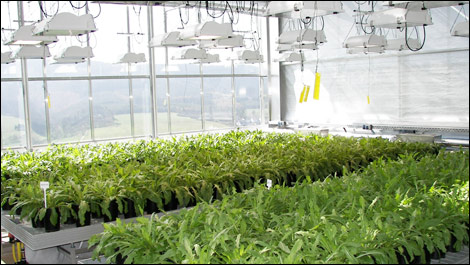
Researchers at the Fraunhofer Institute for Molecular Biology and Applied Ecology IME, in collaboration with tire manufacturer Continental, are building the first-ever pilot system to extract vast quantities of dandelion rubber for making tires.
They use the Russian variety of dandelions because it's the only one that features large quantities of rubber within its white latex sap.
Photo: Fraunhofer IME
The first prototypes made with blends from dandelion rubber are scheduled to be tested on public roads over the next few years. The goal is to develop the production process so that Continental can manufacture tires made from dandelion rubber by 2018.
Rubber from dandelions will help reduce the importation of raw materials since it can be harvested more quickly and in colder climates.
 The latest auto news, reviews, prices, product and vehicle releases. Auto News 5