banner The latest auto news, reviews, prices, product and vehicle releases. Auto News 5

Stay connected Subscribe to our RSS feed

Do not miss the latest Auto News !

Aug
14th

Stock car: Fan Appreciation Night at Peterborough Speedway

Stay connected Subscribe to our RSS feed
From press release

Enjoy a terrific evening of motorsports excitement on Canada's Toughest 1/3-Mile Oval with grandstand admission prices from the past.

Peterborough Speedway and Pepsi present the year's third and final Toonie Spectator Grandstand Admission/Fan Appreciation Night - Saturday, August 16th.

With only three point paying events remaining in the 2014 season, every driver in every division will be doing whatever possible to gain an advantage toward a point title and a strong night on the tight, tricky bullring on Mount Pleasant Road, west of the Liftlock City could be the key that will help unlock the championship puzzle.

A highly competitive season has created tight battles across the board and fans have been rewarded with exciting shows every time the green flag flies.

Action on the track this weekend includes the Peterborough Hyundai Mini Stock, Parry Spring Service Renegade Truck, Earl Ireland Auto Sales Late Model, Inex Ontario Legend and Ontario Modifieds Racing Series divisions. There will also be an on-track autograph session at intermission.

To make-up for a main event postponed by rain Saturday, July 19, the Inex Ontario Legends will run a pair of feature events. Fans and competitors are also advised of revised start times for the Saturday, August 16 event. Pit gates will open at 2 pm, with the spectator grandstands unlocked at 4 pm and racing getting underway at 5 pm.

Looking ahead on the schedule to Saturday, August 23 finds racing with the Battlefield Equipment Rental 4Fun, Parry Spring Service Renegade Truck, Paul Davis Systems Thunder Car, Earl Ireland Auto Sales Late Model and Inex Ontario Legend divisions, with kid's barrel races at intermission.

Aug
14th

Electric bikes may replace local delivery trucks in Germany

Stay connected Subscribe to our RSS feed
The German government is considering electric bikes as a medium-term replacement for trucks in local deliveries.

Reports indicate that the Transport Ministry is spending about €13 million on e-bike science and implementation projects through 2016.

There are about 1.6 million e-bikes on German roads today, many of them built by BMW and Daimler (smart).

The idea is to prevent traffic jams and help reduce pollution in the country. Emissions from transportation have more than doubled since 1970 and may rise at the fastest rate of all major sources through 2070, the United Nations said in April.

Source: europe.autonews.com


Aug
14th

2014 Audi A4 Avant TDI Ultra Review

Stay connected Subscribe to our RSS feed
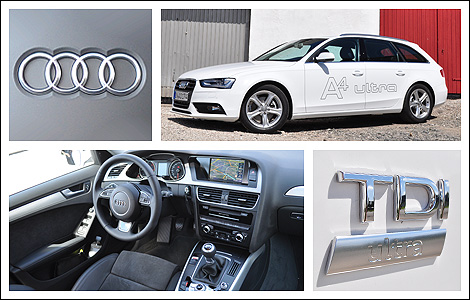
Copenhagen, Denmark -- Another station wagon, another love story. This time, the <3 factor is off the charts. You see, Audi offers an A4 wagon that we are no longer blessed with having in showrooms (other than in Allroad form) that can be motivated by a TDI engine, and a 6-speed manual transmission matched to the legendary Quattro AWD system.

In my books, this is a recipe for triumph. The point of this driving exercise was to explore and make nice with Audi's latest version of its insanely successful diesel engine, the famous TDI. In this A4 Avant, I came face-to-face with power, performance, efficiency, and refinement -- a series of adjectives that only a decade ago were impossible to all associate with a compression-ignition engine.

The new line of TDI Ultra engines will shortly be made available to Audi buyers in North America. Of all on offer, the 2.0L seems best suited for the compact A3 and A4 cars and for our markets. My time with the A4 Avant proved to me that Audi clearly knows what's up when it comes to cake and eating it.


What is an Audi A4 Avant?
The A4 -- found on dealer lots and roads largely unchanged since 2009 -- is Audi's bread-and-butter car. The title of bestseller has shifted to the Q5 recently, but the A4 remains the brand's signature car.

Avant is Audi speak for station wagon and is available for the A4 and A6. The A4 Avant is an excellent family car for the discerning luxury car buyer looking to stow gear and people to go on road trips in style.

2014 Audi A4 Avant Price and Specs
The 2014 Audi A4 sedan sports a base retail price of $37,800. The Allroad, the closest relative to the Avant, goes for $46,500.

A similar as-tested FWD A4 Avant TDI Ultra 6-speed retails for roughly €43,000. On the Canadian market, it would likely go for the same amount, however, in CDN dollars.

What makes the Ultra tick is a newly minted 2.0L TDI 4-cylinder engine that features variable turbine geometry and direction injection. Its rated output is of 163 horsepower and 295 lb-ft of torque. There are more powerful iterations of the 2.0 TDI but this Ultra version is intended primarily for optimal fuel efficiency.

Ultra stands for a number of changes made to the car and its powertrain. The engine is designed with minimal internal friction; the transmission sports taller gear ratios in the higher gears, start-stop technology and aerodynamic modifications, as well as a lower ride height. All of this makes the Ultra cars the most eco-friendly they can be. Case in point, the A4 Avant Ultra is rated at 4.4L/100km (53.5 US mpg) and 114 grams CO2 per kilometer.

Driving the Audi A4 Avant
In ideal Scandinavian summer conditions, the absence of Quattro was never even considered as a letdown as it normally would. The focus of this driving experience was not practicing my Scandi-flick around every tight bend, it was a voyage of discovery in the world of diesel proficiency and performance.

As I expected, torque delivery is immediate and lustfully 100% on tap as of 1,750 rpm. Turbocharging and direct injection created a series of engines that generate a large lag-free powerband rich with low-end torque and mid- to high-end horsepower.

The push is rewarding, but not mind blowing -- satisfactory is the right word. Rowing through the gates of the 6-speed manual box is pleasant as the pedals are well positioned and the shifter's travel is slick. Steering is precise and well judged.

Handling is good or better than any 1,650+ kg (3,630+ lb) station wagon in its category. The A4 Avant's chassis and suspension are geared for comfortable cruising without sacrificing stability. The A4, despite getting on in age, feels solid and every bit as German and sturdy as it should be.

Sadly, on these brief driving events, I never get to figure out fuel mileage. The indicated average was in the mid 5 litres per 100 km, which (knowing I was behind the wheel) is impressive.

Inside and Out of the Audi A4 Avant
A growing concern for Audi is the A4's age. The new car should have been introduced by now, but various reasons have stalled the intro of the next one. Be that as it may, the current A4 is a handsome, uber German saloon or estate.

Sober, elegant and still modern design-wise, the A4 looks great especially when shod with the right wheels and the S-Line package.

Lifting the hatch reveals a decent-size trunk willing and able to carry weekend camping gear or hockey equipment. Both rows of seats are welcoming and cozy. The cabin is plenty roomy for 4 adults and the rear bench will accommodate 3 if need be.

The A4 Avant's front quarters are classy and well appointed. All in all, the A4 Avant 2.0 TDI Ultra would make an excellent car for touring Europe; it is roomy, comfortable, and great on fuel.

Comparing the Audi A4 Avant
North America is privy to BMW's 3 Series wagon, with either a gas or diesel engine. If an A4 Avant were to again be offered, the 3 would be its greatest foe. Only inches behind would be the fantastically sexy Volvo V60.
Aug
14th

NASCAR: Kyle Busch to stay in No. 18 M&M’s Toyota

Stay connected Subscribe to our RSS feed
From nascar.com

Mars announced Wednesday that it has signed multi-year deals to continue its winning partnership with Joe Gibbs Racing and NASCAR.

Kyle Busch will stay in the iconic No. 18 M&M's Toyota Camry, which he has piloted to 20 wins since he and the sponsor joined JGR in 2008.

As a team sponsor and the Official Chocolate of NASCAR, Mars has seen a 4-to-1 return on its investment in the sport, according to a 2012 study.

Beginning in 1990 as a team sponsor, the company's investment has grown to primary sponsorship on Ernie Irvan's No. 36 car in 1999 and official partner status with NASCAR in 2006.


Aug
14th

2014 Audi TDI Workshop

Stay connected Subscribe to our RSS feed
Rudolf Diesel invented the compression-ignition engine almost 125 years ago. The full potential of this technology continues to elude engineers, although they've never been closer.

A large number of manufacturers dabbled in diesel over the last few decades, though few have taken this source of energy as far as Audi. The luxury brand, under the Volkswagen Auto Group umbrella, dove headfirst into diesel 25 years ago with their first production TDI-equipped car, the 1989 Audi 100. At the time, the 2.5L 5-cylinder mill developed 120hp and 195 lb-ft of torque. The engine featured turbocharging and direct injection.

The progress of diesel over the last 25 years has been staggering. From the aforementioned 100, engines grew in all regards relative to proficiency. Variable turbine geometry raised and flattened the torque curve making the whole of the driving experience more interesting. Common rail injection and cooled exhaust gases came next as did high-pressure injection (1350 bar injection pressure in the 1999 3.3L V8 TDI).

Audi got a little silly afterward, toying with the idea of mad power from their diesel mills. Enter the 500-horsepower and 1,000 Nm (738 lb-ft) of torque from a 6.0L V12 TDI introduced in 2008. I actually sampled the engine in a period Q7. Mental.

From then on, Audi went into racing with their TDI technology with the results we all know. They've also right-sized their engine offerings to match their products.

2014 Audi TDI Workshop
Photo: Mathieu St-Pierre

Diesel, on the grand scale
The development of the TDI engine and its surrounding technology was brought on by the desire to lower fleet fuel consumption and to increase efficiency -- essentially to get more out of every drop of fuel.

To date, Audi has sold over 7.5 million cars shod with TDI mills. In 2013 alone, the four-ring brand delivered 600,000 TDI units worldwide. This is a clear indication that demand for this clean and efficient technology is on the rise. As a very important FYI, Audi owns a 40% share of all diesel powertrains sold in Europe. It is in fact the largest share and reach of any other manufacturer in the world.

Audi, altruistic to a fault or so it would seem, has the planet's well-being on its mind given the vast amount of financial resources it poured into developing green alternative solutions. Thankfully, many other carmakers are doing the same.

Today, there are 1 billion cars on the road. According to experts, that number is expected to increase to 3 billion cars by 2030. Factor in CO2 regulations that state that by 2020, manufacturer fleet averages must be 95 grams of C02 per kilometer and car manufacturers have a crap-load of work on their hands.

Audi's on the case.

2014 Audi TDI Workshop
Photo: Mathieu St-Pierre

Diesel is part of every solution
Compression-ignition engines are part of a large-scale strategy that Audi's forged out of the need to diversify energy sources for present and future automotive needs. Besides diesel, Audi's onslaught of solutions and alternatives includes the e-tron and g-tron technologies which both have enormous amounts of merit.

As traffic density continues to increase, Audi's plan is to right-size powertrains for each application. For example, the A4 sports a 2.0 TDI, the A6 and A7 get a 3.0 TDI and the flagship A8, a 4.2 TDI V8 with turbos and gobs of power. As a measure to keep efficiency and performance in line with the brand's image, Audi's also making more powerful iterations of the engines available. For example, the 3.0 TDI in the Competition edition A7 generates 346 horsepower and Everest-like amounts of torque.

Audi's TDI solution is all encompassing, as you can tell. On top of the miserly fuel numbers, the cars will remain just as engaging to drive as was demonstrated by my time behind the wheel of an A4 Avant TDI Ultra.

2014 Audi TDI Workshop
Photo: Mathieu St-Pierre

Ultra modularity
Modularity is key in creating many options and alternatives at reasonable costs. Volkswagen Group's modular diesel engine platform (MDB) is designed to combine electric motors with combustion engines, including TDI units. Audi's e-tron family is rapidly growing and we will soon come face-to-face with the A3 e-tron in showrooms. This hybrid technology will eventually be mated to a TDI and then we'll be talking serious talk.
The Ultra designation signifies that the powerplant located under the bonnet is engineered for the lowest fuel consumption and for maximum efficiency. Currently, Audi offers 23 Ultra models in the A3, A4, A5, A6, and A7. Of the lot, 15 are equipped with TDI engines that consume an average of 3.2L to 4.9L/100km (48 to 73.5 US mpg).

2014 Audi TDI Workshop
Photo: Mathieu St-Pierre

Electric turbocharging
One of the many tricks up Audi's sleeve is the electric biturbo technology. The exhaust turbocharger works together with a supplemental, electric-powered compressor. This compressor uses a small electric motor, instead of a turbine wheel, to accelerate airflow. As such, it eliminates all lag under throttle at low engine speeds. Throttle response is thus spontaneous. The compressor wheel is bypassed under normal engine operation.

Diesel in the future
What's most impressive is that diesel technology continues to evolve and, when combined to Audi's plan of blending through modularity all of its technologies, I see no need to fear the coming of all the more demanding and stringent emissions laws.
Through my road tests of the A3 e-tron and A4 TDI Ultra, driving pleasure and performance remain. The only “loss” is in the environmental footprint I leave behind.

Aug
14th

F1: Verstappens play down 2015 Toro Rosso seat rumours

Stay connected Subscribe to our RSS feed
From GMM

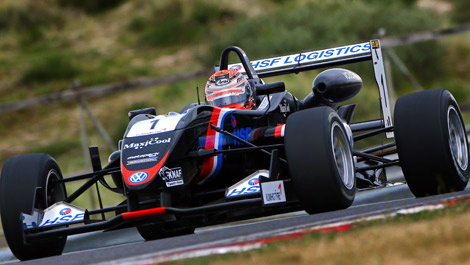
Max Verstappen's father has played down reports his son will make his Formula 1 debut as a 17-year-old next March.

De Telegraaf newspaper claims the young Dutchman, newly signed up with Red Bull's famous driver development programme, will replace Frenchman Jean-Eric Vergne at Toro Rosso in 2015.

Having stepped up from karts to Formula 3 this year, Red Bull gave the young Verstappen a taste of more horsepower this week with a private test in a Formula Renault 3.5 car at the Red Bull Ring.

"I had a great time," Max, whose father Jos raced in F1 until 2003, said. "My goal was to drive as much as possible, feel the car and adapt to high speeds, and everything went well."

Max Verstappen V3
Barely in his first season of car racing, Max Verstappen is already linked to a move to F1 (Photo: WRi2)

His father Jos, however, swerved reports his son is heading towards a grand prix race debut with Red Bull's second F1 team Toro Rosso next year.

"We will discuss it with Red Bull and see what is possible within the programme," said the former Benetton and Minardi driver.

But De Telegraaf cited a 'Toro Rosso source' as saying Verstappen will be the Faenza outfit's new race driver in 2015.

The newspaper said more will be revealed during the forthcoming Belgian Grand Prix weekend.


Aug
14th

F1 Technique: Formula 1 fuel flow sensor explained

Stay connected Subscribe to our RSS feed
Today we take a closer look to the infamous fuel flow sensors; the device that led to the disqualification of Daniel Ricciardo and his Red Bull RB10 from the 2014 Australian Grand Prix.

Racecar Engineering recently posted a very complete feature on that topic.

To limit the power of the new Formula 1 V6 Power Units, the FIA introduced two major new regulations this season: the fuel tank is limited to 100kg (220 pounds) of fuel, and the amount of fuel the V6 engine can swallow per hour, which is limited to 100kg.

In Formula 1, fuel load in F1 is calculated by mass (kg) rather than volume (litres).

Like in sportscar racing such as Le Mans' LMP categories, there is a restriction on how fast the fuel can be injected into the engine. In other words, it would be like if there was some kind of a funnel at the end of the fuel line prior to the motor.

Fuel rate varies constantly depending on various factors such as engine speed. However, at peak power, the fuel low in F1 cannot exceed 100kg/hour.


The above video shows how flow rate changes over a lap of the road course at Daytona International road course.

The simulated car is an LMP2 but the data is similar to what would be seen in an F1 car. The box on the top left shows the instant flow rate, the central box shows the same but in a cleaner form, whilst the top left shows the total fuel consumption.

In F1, the FIA mandates all cars to carry a spec fuel flow sensor. Generally it is installed inside the fuel cell area of the car. These sensors are made by Gill Sensors, a British company that specialises in devices used to monitor fluids.

Gill fuel flow sensor
Gill fuel flow sensor (Photo: Gill)

The Gill meter works using ultrasonic technology to calculate the flow rate.

The sensor uses the differential transit time principle to measure the velocity of fluid using ultrasound and time of flight technology, by detecting the time an ultrasonic pulse takes to reach one transducer from another.

Since the technology used the sensor has no moving parts, this solid-state approach means there is minimal interference to the flow path, resulting in higher accuracy, the company says.

FIA officials can monitor fuel flow in each car when it is out on the race circuit, and an alarm is set when the maximum flow of 100kg/hour is exceeded.


Aug
13th

Subprime auto loans’ risk is acceptable, analysts say

Stay connected Subscribe to our RSS feed
The rising number of subprime auto loans doesn't represent a disaster waiting to happen, akin to the mountain of subprime mortgages that went bad and set off the Great Recession, Moody's says.
Aug
13th

ANALYSIS: Piston days – Daimler leads steel charge

Stay connected Subscribe to our RSS feed
In an automotive era when vehicle lightweighting is all the rage and vehicle manufacturers such as JLR and Ford launching all-aluminium versions of mainstays of their product ranges it seems incongruous that diesel engine pistons are bucking this trend by increasingly moving to steel from aluminium.
Aug
13th

BRAZIL: Halla Visteon Climate Control begins production at Brazil plant

Stay connected Subscribe to our RSS feed
Halla Visteon Climate Control Corp. (HVCC) has celebrated the opening of its first manufacturing facility in South America.
Aug
13th

Ford demonstrates Magna’s seamless rear window on new F-150

Stay connected Subscribe to our RSS feed
Ford today demonstrated its 'seamless sliding rear window' feature developed by Canadian supplier Magna International for the new 2015 Ford F-150 pickups.
Aug
13th

ANALYSIS: BMW – 2Q14 results insight

Stay connected Subscribe to our RSS feed
An accelerating model momentum that includes product renewal and proliferation of the portfolio into an increasing number of new sub-segments has been and continues to be the key driver of the strong earnings growth at the BMW Group.
Aug
13th

Honda consolidates digital media work

Stay connected Subscribe to our RSS feed
American Honda is consolidating its digital marketing business for both the Honda and Acura brands with a team drawn from Razorfish and siblings at Publicis Groupe.
Aug
13th

Manheim enters Brazil with acquisition of auction company CarBizz

Stay connected Subscribe to our RSS feed
Manheim, the largest auto auction company in the United States, has expanded its global operations into South America with the acquisition of Brazilian auction company CarBizz.
Aug
13th

GM will invest $174 million in Lansing stamping operation

Stay connected Subscribe to our RSS feed
General Motors is investing $174 million in a new stamping line at its Grand River assembly plant in Lansing, Mich.
Aug
13th

US: GM to start US$174m Lansing stamping facility

Stay connected Subscribe to our RSS feed
General Motors says it will start construction of a US$174m stamping facility that will create or retain around 145 jobs.
Aug
13th

Detroit 3 and others ready to roll at annual Dream Cruise

Stay connected Subscribe to our RSS feed
Muscle cars abound at the annual Woodward Dream Cruise outside Detroit -- and this year is no exception.
Aug
13th

Dodge drops 707-hp supercharged Hellcat engine into 2015 Charger SRT

Stay connected Subscribe to our RSS feed
Chrysler Group today unveiled its second car that will be powered by its 707-hp supercharged 6.2-liter Hellcat engine, a 2015 Dodge Charger SRT Hellcat.
Aug
13th

Pre-registered cars: buying guide

Stay connected Subscribe to our RSS feed
Pre-reg guide
Tips & advice 12 Nov, 2018

Pre-registered cars explained: what they are and how they can save you a bundle of cash over a brand-new car

Aug
13th

Pre-registered cars: buying guide

Stay connected Subscribe to our RSS feed
Pre-reg guide
Features 17 Aug, 2014

Our guide shows you how to take advantage of the great discounts available on pre-reg cars

Hosted by CifTech Hosting.